
If your eyes feel watery outside, gritty by the afternoon and tired by the end of the day, you are not alone. Winter in Manitoba is hard on the surface of the eye. Your tears need the right balance of water, oil and mucus to keep your eyes comfortable, and winter conditions throw that balance off in several ways at once. Here are five common reasons your eyes may feel worse this time of year, and what can help with each.
1. Cold air holds less moisture
Cold air holds much less moisture than warm air, so the tears on the surface of your eyes evaporate faster when you are outside. On a cold, dry day, even a short walk can leave your eyes feeling irritated.
What can help: Wear sunglasses or wraparound glasses outdoors to shield your eyes, and blink fully and often when you come back inside. Lubricating eye drops can help restore moisture; ask your optometrist which type suits you.
2. Indoor heat dries the air even more
Furnaces, fireplaces and space heaters keep us warm, but they also lower the humidity inside your home and workplace. Many Manitoba homes sit at very low humidity through the coldest months, which keeps drawing moisture from your eyes all day and night.
What can help: Run a humidifier, especially in the bedroom, and keep space heaters pointed away from where you sit. Drinking enough water through the day also helps your body keep up with tear production.
3. Wind leads to watery eyes
When cold wind dries out your eyes, they try to make up for it by producing extra tears. Those tears are mostly water, so they run down your cheeks instead of coating the eye. That is why your eyes can water in the wind and still feel dry once you are back inside.
“Your eyes can water in the wind and still feel dry once you are back inside.”
What can help: Block the wind with close-fitting sunglasses or ski goggles for outdoor activities. If watery eyes are a regular problem, mention it at your next exam, since the underlying cause is often dryness rather than too many tears.
4. Car heaters blow warm, dry air at your face
On a long winter drive, the car heater blows a steady stream of warm, dry air. When the vents are aimed at your face, your eyes can dry out quickly, which can make your vision feel blurry or tired behind the wheel.
What can help: Point the vents toward your feet or the windshield instead of your face, and use the recirculation setting sparingly. Keep a pair of sunglasses in the car for low winter sun and glare off the snow.
5. More time indoors means more screen time
Shorter days mean more time indoors, and often more time on phones, computers and TVs. We blink less when we concentrate on a screen, so tears are not spread across the eye as often and evaporate between blinks.
What can help: Follow the 20-20-20 rule: every 20 minutes, look at something 20 feet away for 20 seconds. Try to blink fully, keep your screen slightly below eye level, and take regular breaks. Anti-reflective lenses can also make long screen sessions more comfortable.
Choosing eye drops
Lubricating drops, sometimes called artificial tears, can bring quick relief. Preservative-free drops are often better if you use them several times a day, and redness-relief drops are not meant for dry eye. If you wear contact lenses, check that the drops are safe for your lenses. Your optometrist can recommend a product that suits your eyes.
When to book an eye exam
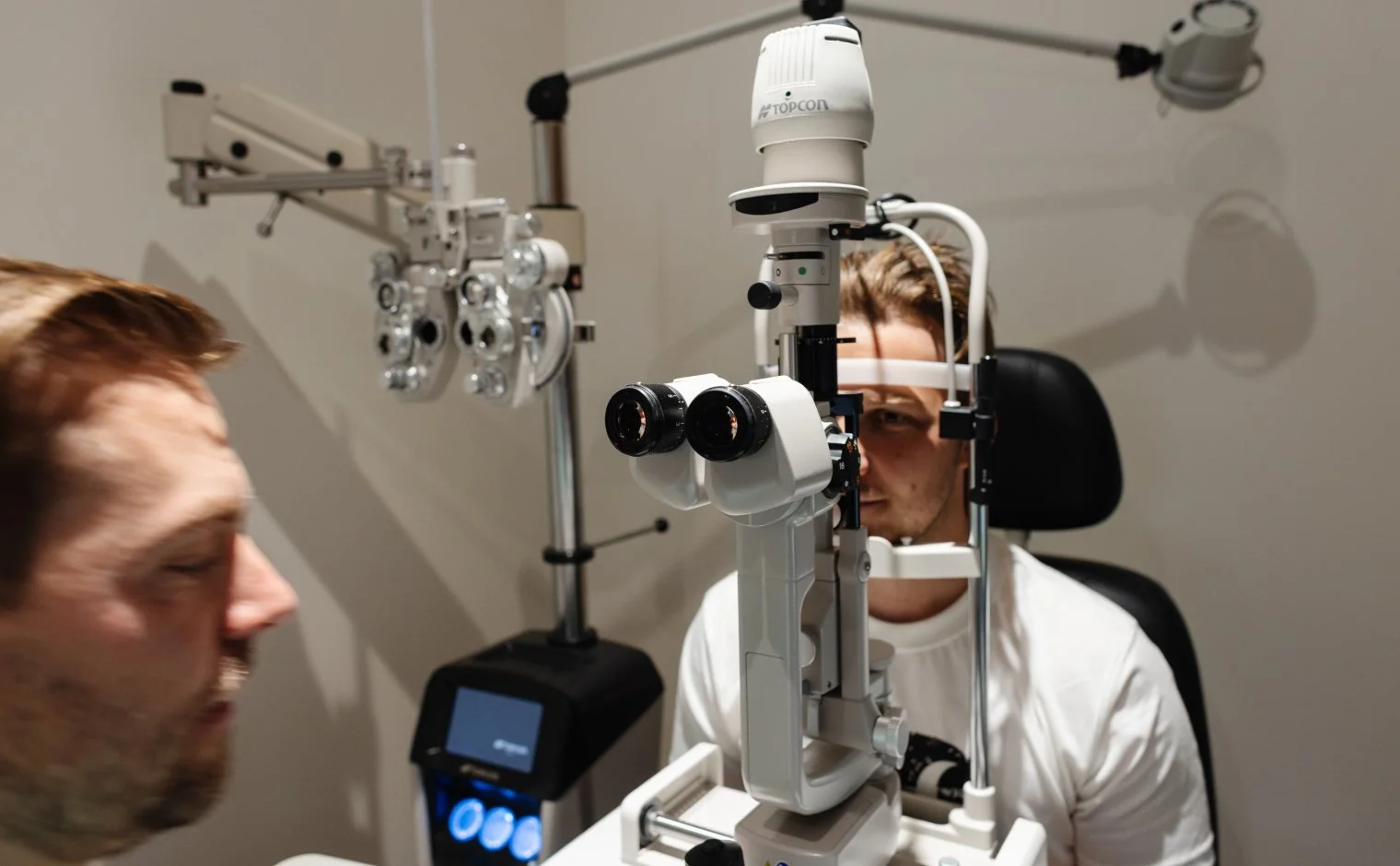
If your symptoms last more than a couple of weeks, affect your vision or make contact lenses uncomfortable, book an eye exam. Dry eye can have several causes, including blocked oil glands along the eyelids, and the right treatment depends on the cause. Our optometrists can assess your tear film and eyelids and recommend a plan, from at-home care to dry eye treatment in the clinic.
Do not wait if you have sudden eye pain, sudden vision loss or change, new flashes or floaters, a shadow or curtain over your vision, light sensitivity, an eye injury or a chemical in the eye. Call your nearest clinic right away. If we are closed, go to the nearest emergency department.